
Choosing between armed and unarmed security is not about looking tough. It is about matching the right level of protection to the real risk in front of you.
For California businesses, that decision should consider the site, the people, the hours, the history of incidents, and the kind of experience you want customers, tenants, employees, or guests to have.
According to the U.S. Bureau of Labor Statistics, violent acts caused 733 fatal workplace injuries in 2024, which is why thoughtful coverage is not just a property decision, but a people decision.
For businesses that need help evaluating coverage, CB Security Solutions builds security plans around professionalism, clear reporting, and the actual risk profile of the environment.
Armed vs. Unarmed Security in California: The Core Difference
Quick definition: Unarmed security focuses on visibility, access control, patrol, de-escalation, reporting, and policy enforcement. Armed security includes many of those same duties, but adds a licensed armed presence for environments where the risk of violence, high-value exposure, or targeted threat is higher.
| Factor | Unarmed Security | Armed Security |
| Best for | Order, access control, patrol, guest support | Elevated threats, high-value assets, VIPs |
| Public perception | Softer, approachable, service-oriented | Stronger deterrence, more serious posture |
| Risk fit | Low to moderate | Moderate to high |
| Training and compliance | California guard licensing | Guard licensing plus firearms authorization |
| Common use cases | Lobbies, restaurants, retail, parking lots, HOAs | Executive protection, sensitive transport, prior threats |
Armed Security Is for Elevated Threat Environments
Armed security services in California are generally appropriate when there is a credible risk of violence, prior incidents, high-value property, cash or jewelry movement, executive exposure, celebrity clientele, or a need for stronger deterrence. The point is not to create fear. The point is to make the security posture match the seriousness of the environment.
Unarmed Security Is for Visibility, Access Control, and De-Escalation
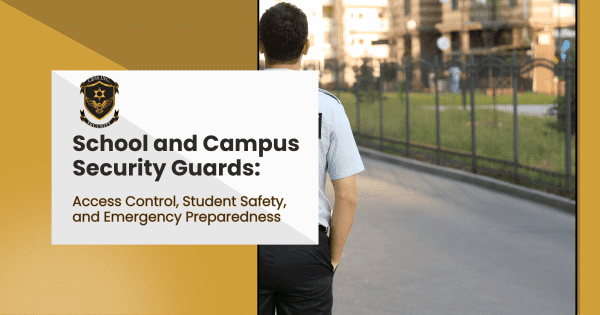
Unarmed guards often handle the everyday security work that keeps a property controlled and calm. That includes checking access points, walking patrols, supporting front-of-house staff, observing suspicious activity, documenting incidents, and communicating with management. For many businesses, strong security officer duties and responsibilities matter more than whether a guard is armed.
Start With Risk Level, Not Fear
The best security decision starts with a risk assessment. A quiet office lobby does not need the same posture as a late-night venue, a contentious deposition, or a jewelry transport. Before choosing armed or unarmed coverage, ask what you are actually trying to prevent.
Low-risk sites usually need unarmed coverage. These include office lobbies, residential communities, low-conflict retail stores, parking areas, reception desks, and after-hours patrol routes. In these settings, the goal is usually order, visibility, access control, and documentation. An unarmed officer can create structure without making the environment feel tense.
Moderate-risk sites may need a hybrid plan. Some properties are calm most of the time, but not always. A restaurant may need unarmed host-stand support on weekdays and stronger coverage for weekend closing shifts. A commercial property may need unarmed patrol during business hours and mobile patrol after hours. A retail location may need visible floor support, theft deterrence, and escalation procedures tied to a broader loss prevention security plan.
High-risk sites may require armed security. Armed coverage may be appropriate where there are credible threats, violent incidents, high-value goods, executive exposure, workplace terminations, celebrity clientele, or sensitive transport needs. In these cases, the decision should be tied to facts, not anxiety.
A practical risk review should consider:
- Prior threats, assaults, trespassing, theft, or vandalism
- Public access and crowd behavior
- Cash, jewelry, inventory, or confidential materials
- Employee conflict, terminations, or litigation tension
- Nighttime operations, closing shifts, and parking exposure
- VIPs, executives, high-net-worth individuals, or public figures
- Whether a softer brand experience needs to be preserved
When Unarmed Security Is the Better Fit
Unarmed security is not the weaker option. It is often the smarter option when the business needs calm authority instead of visible force.
Best fits for unarmed security:
- Front-desk access control
- Restaurant host-stand support
- Parking lot patrol
- Residential community patrol
- Retail floor presence
- Warehouse gate checks
- Visitor screening
- Incident documentation
- After-hours lockup verification
Customer-facing businesses often benefit from a softer presence. Restaurants, hotels, retail stores, medical offices, and residential communities need security that can interact with people without changing the tone of the room. A polished unarmed officer can help maintain order, direct guests, support employees, and deter misconduct while still allowing the business to feel welcoming.
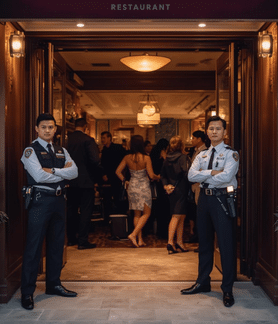
That balance is especially important in hospitality. A guard at the door of a restaurant should not feel like a wall between the customer and the experience. The right presence feels composed, aware, and professional. For restaurant groups, retail stores, and commercial properties, CBSS industry-specific security coverage can help match the security posture to the setting.
Unarmed guards can also create strong documentation. Daily logs, incident reports, photo documentation, management updates, and clear escalation protocols can make a major difference when a business needs to understand patterns over time. For larger sites, unarmed coverage can also be paired with vehicle patrol security to cover parking lots, perimeters, loading zones, and after-hours risks.
When Armed Security Is the Smarter Choice
Armed security is justified when the risk profile calls for a stronger protective layer. That does not mean every uncomfortable situation requires an armed guard. It means the business has identified specific indicators that make armed coverage reasonable.
Risk indicators that may justify armed security:
- A credible threat against an employee, executive, tenant, or guest
- Prior violence at or near the property
- High-value inventory, jewelry, cash, or sensitive assets
- Contentious legal matters, depositions, or client meetings
- Executive protection or celebrity clientele
- Late-night operations with repeated incidents
- Secure transportation for valuable items or high-risk individuals
Armed coverage should match a specific threat profile. For example, a law firm hosting a contentious meeting may not need an intimidating presence in the lobby, but it may need discreet protection nearby. A restaurant with high-profile guests may need suited, low-profile armed personnel who understand hospitality. A business moving jewelry, cash, or sensitive materials may need an armed escort as part of a broader secure transportation plan.
Discretion matters as much as firepower. The best armed personnel are not theatrical. They are observant, calm, trained, and able to communicate clearly. For high-net-worth clients, public-facing businesses, executives, and sensitive environments, physical security for executives should feel controlled and professional, not disruptive.
California Licensing and Compliance Considerations
California security is regulated, and clients should verify credentials before hiring any provider. The California Bureau of Security and Investigative Services, commonly called BSIS, licenses and regulates private security services. Before hiring a company, confirm that the provider is properly licensed and that the assigned guards have the required credentials for the work being performed.
Compliance checklist before hiring:
- Verify the company’s California PPO license
- Confirm individual guard registration
- Confirm training and background requirements
- For armed guards, confirm firearms permit authorization
- Ask about post orders, supervision, reporting, and escalation policies
- Use the official BSIS license verification tool
For unarmed guards, California guard registration includes requirements such as background checks and required training. For armed guards, the standard is higher. BSIS explains that a firearms permit authorizes the permit holder to carry an exposed firearm only while performing duties under the license types listed on that permit. BSIS also requires an assessment tied to judgment, restraint, and self-control for carrying and using a firearm while on duty.
That is why clients should not treat “armed” as a simple upgrade button. A professional provider should explain the licensing, the post orders, the reporting process, and the supervision structure before coverage begins.
Industry Examples: Which Coverage Fits Your Setting?
| Industry or Setting | Common Risks | Recommended Coverage | Why |
| Restaurants and hospitality | Guest disputes, closing shifts, VIPs, nightlife | Unarmed, armed, or hybrid | Depends on hours, clientele, and incident history |
| Law firms | Contentious meetings, depositions, sensitive arrivals | Discreet unarmed or armed coverage | Helps protect staff, clients, and private proceedings |
| Retail | Theft, confrontations, employee safety | Unarmed with escalation, sometimes hybrid | Supports deterrence without damaging customer experience |
| Warehouses | Theft, after-hours access, truck yards | Patrol, unarmed, or armed for elevated risk | Protects inventory and access points |
| Executives and secure transport | Predictability, high-value movement, public exposure | Armed or hybrid | Risk follows the person or asset |
Restaurants and hospitality businesses often need coverage that protects the guest experience while supporting the team. Routine coverage may call for unarmed officers at entrances, patios, or parking areas. Armed or hybrid coverage may make sense for celebrity clientele, repeated threats, high-profile events, or closing shifts.
Law firms may need security for depositions, employment disputes, sensitive client arrivals, or contentious meetings. The right coverage should be discreet, professional, and coordinated with office management.
Commercial properties, retail environments, and warehouses often need layered plans. A retail site may benefit from retail security guards and loss prevention support, while a warehouse may need warehouse security solutions built around access points, patrols, cameras, and reporting.
Cost, Liability, and Public Perception
Armed security can increase deterrence, but it also raises expectations. If a business deploys armed guards, there should be clear post orders, defined escalation policies, documented reporting requirements, and supervision. The added cost is not only the guard rate. It is also the need for stronger planning, tighter communication, and careful alignment with the risk.
Unarmed security can be more appropriate for brand experience. Many customer-facing businesses need a person who can greet, observe, de-escalate, document, and call for assistance when necessary. That kind of calm authority often solves the problem without creating a heavier atmosphere.
A simple way to think about it is this:
- Choose unarmed if the main goal is order, visibility, access control, and documentation.
- Choose armed if the main risk is violence, targeted threat, or high-value exposure.
- Choose hybrid if risk changes by hour, event, location, or assignment.
How CB Security Solutions Helps Clients Choose the Right Coverage
CB Security Solutions helps clients avoid the two most common mistakes: under-protecting a real risk or overbuilding a plan that does not fit the environment. The goal is right-sized protection.
Step 1: Review the site and risk factors. CBSS looks at the property layout, entry points, staffing hours, prior incidents, public access, and threat history.
Step 2: Recommend armed, unarmed, or hybrid coverage. The recommendation should match the risk, the budget, and the client experience. That may mean unarmed coverage, armed security protection, vehicle patrol, executive protection, or a layered plan across multiple sites.
Step 3: Build post orders, reporting, and communication protocols. Strong security depends on clarity. Officers need to know what to watch, when to escalate, how to document, and who receives updates.
If your business is unsure what level of coverage makes sense, start with a professional assessment. Whether you operate in Los Angeles, Santa Barbara, Riverside, or another California service area, CB Security Solutions services can help you build a security plan that feels practical, professional, and built around real risk.
Armed security is not always better, and unarmed security is not automatically enough. The right choice depends on risk level, public access, prior incidents, asset value, customer experience, and the professionalism of the provider. Start with the facts, verify licensing, and choose coverage that protects people without creating unnecessary friction.