
Restaurants, bars, lounges, and nightlife venues live in a delicate balance: the space needs to feel welcoming, energetic, and effortless, while the operation behind it needs to be controlled, alert, and prepared. That is where CB Security Solutions helps hospitality venues protect the guest experience without turning the front door into a wall of intimidation.
The Bureau of Labor Statistics reported 57,610 nonfatal workplace violence cases requiring days away from work, job restriction, or transfer in private industry over 2021–2022, and OSHA identifies working where alcohol is served and working late at night as risk factors employers should consider. For restaurants and nightlife venues, that makes security more than a “nice to have.” It is part of protecting staff, guests, reputation, and revenue.
Why Restaurant and Nightlife Security Requires More Than a “Bouncer”
Restaurant and nightlife security helps venues prevent conflict, manage entry, support staff, document incidents, and maintain a safe guest experience. A traditional “bouncer” model often focuses on size, force, and removal. Professional hospitality security focuses on prevention, communication, observation, and controlled response.
The difference matters. A polished security team does not hover over guests or make the room feel hostile. The right team supports the rhythm of the venue by staying visible, calm, and useful. They understand when to step forward, when to stay back, when to alert management, and when a small moment needs attention before it becomes a serious event.
Security Should Protect the Experience, Not Intimidate the Guest
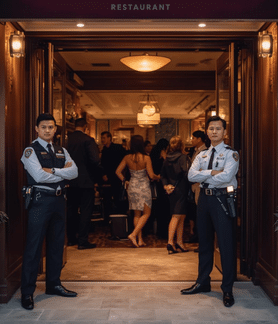
Good security should make guests feel safer without making them feel watched. That means professional appearance, clear communication, and a service-minded approach. For upscale restaurants, lounges, franchises, and nightlife concepts, security becomes part of the brand environment. The guard at the door, near the bar, or by the exit is not just “security.” They are one of the first and last impressions a guest receives.
The Real Goal Is Prevention Before Removal
The best security outcome is often the one guests never notice. A trained officer may spot rising tension, separate two parties, support a manager’s decision, or calmly redirect an intoxicated guest before the room changes temperature. Prevention is quieter than removal, but it is usually far more valuable.
The Most Common Security Risks Restaurants, Bars, and Nightlife Venues Face
Restaurants, bars, and nightlife venues face risks that move quickly because the environment is public, social, emotional, and often alcohol-driven. Security coverage helps manage issues such as:
- Guest fights or heated confrontations
- Over-intoxication and refusal-of-service disputes
- Line cutting, crowd pressure, and entry complaints
- Harassment between guests
- Staff intimidation or aggressive behavior toward employees
- Walkouts, theft, trespassing, and unauthorized access
- VIP, celebrity, or high-profile guest concerns
- Closing-time loitering near exits, sidewalks, or parking areas
California’s Responsible Beverage Service training program is built around reducing alcohol-related harm, and that same prevention mindset should carry into a venue’s security plan. Security is not a replacement for responsible service, management judgment, or staff training. It is the layer that helps those systems work when pressure rises.
Guest Conflicts and Alcohol-Related Escalation
Small conflicts can become large quickly in alcohol-serving environments. A spilled drink, a crowded dance floor, a perceived insult, or a denied entry decision can turn into a confrontation if no one intervenes early. Security helps by watching body language, listening for repeated friction, and creating space before people feel cornered.
Entry Problems, Long Waits, and Line Cutting
The front door is one of the highest-risk areas on a busy night. Guests may be cold, impatient, excited, intoxicated, or upset about a reservation issue. Clear door rules, consistent communication, and visible line management can prevent the “why them, not me?” frustration that often starts conflict.
Staff Safety and Guest Misconduct
Hosts, servers, bartenders, and managers should not have to become the physical barrier between the business and an aggressive guest. Security gives staff backup while allowing employees to stay in their roles. That support protects morale, reduces panic, and helps management enforce house rules with confidence.
How Security Teams Help Prevent Fights Before They Start
Professional security prevents fights by creating a structured response before emotions take over. A strong fight prevention process usually includes:
- Observe early warning signs. Officers look for pacing, staring, crowding, intoxication, repeated verbal exchanges, and guests who keep circling back toward one another.
- Create distance. Separating parties before a confrontation becomes physical is often the cleanest intervention.
- Use calm verbal communication. The goal is to lower the emotional temperature, not challenge the guest’s pride.
- Move disputes away from dense areas. If a conversation needs to happen, it should not happen in the middle of a crowd, bar queue, or doorway.
- Support management decisions. Security should help enforce house rules, denied service, denied entry, or removal decisions without making managers stand alone.
- Remove only when necessary and safe. Ejection should be controlled, documented, and handled with the least disruption possible.
This is also where clear post orders matter. A guard should know the venue’s priorities before the shift begins. Who has final authority on removal? When should law enforcement be called? Where should disruptive guests be escorted? Which areas require special attention? These answers should not be improvised in the middle of a busy Saturday night.
For venues that need a higher-risk coverage model, CBSS can help evaluate whether armed security protection is appropriate, especially for VIP clientele, high-value movement, or locations with a heightened threat profile.
Managing Lines, Door Flow, and Crowd Pressure Without Losing the Hospitality Feel
Line management is not just crowd control. It is guest experience, risk management, and brand protection all at once. A poorly managed line can create sidewalk congestion, frustrated guests, unfairness complaints, and pressure on hosts or door staff.
A practical line management checklist includes:
- Define one clear entry point and one clear exit path
- Keep the queue organized before peak hours begin
- Coordinate reservations, guest lists, and walk-ins with host staff
- Communicate wait expectations calmly and consistently
- Watch for line cutting, crowd compression, and sidewalk spillover
- Keep door staff and security aligned on who may enter and when
- Use the same rules for every guest unless management has approved a specific exception
Clear Entry Rules Reduce Conflict
Guests are more likely to accept a rule when it is applied consistently. Cover charges, guest-list cutoffs, dress expectations, ID checks, re-entry policies, and capacity limits should be clear to the team before service begins. Confusion at the door creates tension. Consistency gives security and management a stronger foundation.
Communication Matters More Than Force
A calm explanation often does more than a hard command. Professional door security should be direct without being disrespectful. The tone should say, “We have this handled,” not “We are looking for a fight.”
Crowd Flow Should Be Planned Before Peak Hours
The best time to fix the door is before the rush. Pre-shift planning should cover post positions, expected volume, VIP arrivals, nearby events, staff assignments, and escalation rules. CBSS builds coverage around real operating conditions, not generic assumptions, through its broader security services and site-specific planning approach.
Protecting Staff, Managers, and Guests During High-Stress Moments
When something goes wrong, security helps create separation, control movement, and support management decisions. That may mean standing near a host who is dealing with an angry guest, escorting a disruptive person out, helping staff avoid direct confrontation, or staying visible during closing time when intoxication and frustration often peak.
Security Gives Staff Backup Without Making Them the Enforcer
Employees should not have to absorb threats, intimidation, or physical risk as part of hospitality work. A server should not have to remove a hostile patron. A bartender should not have to manage a group that refuses to leave. A host should not have to argue with a guest who keeps pushing past the podium. Security gives staff a professional layer of support so they can keep doing their jobs.
For more on the broader role of security officers, CBSS explains the duties and responsibilities of security officers and how professional conduct, observation, and reporting all work together.
Closing Time Is a Critical Security Window
Closing time deserves special attention. Guests may linger outside. Staff may be leaving with cash, equipment, or personal belongings. Parking lots, alleys, and sidewalks may become less controlled than the dining room or bar area. A strong closing plan should include interior clearing, exterior visibility, staff walkout awareness, and manager communication.
Documentation, Incident Reports, and Why They Matter After a Security Event
Good security is also good recordkeeping. When an incident occurs, the business should not have to rely on memory the next morning. A strong incident report should include:
- Date and time
- Location within or around the venue
- Names or descriptions of involved parties
- Staff members involved
- Witnesses, if known
- Actions taken by security and management
- Whether law enforcement, medical help, or emergency services were called
- Video preservation notes
- Follow-up recommendations
Documentation helps management see patterns. Are fights happening near the same bar station? Are line disputes worse after a certain hour? Are staff members repeatedly dealing with the same type of guest misconduct? Those answers help refine staffing levels, post orders, and security placement.
CBSS emphasizes clear reporting, daily logs, and supervisor oversight across its services, including related coverage models such as retail security guards and vehicle patrol security, where documentation is just as important as visibility.
What to Look for in a Restaurant or Nightlife Security Provider
Before hiring a security company, venue owners and operators should look beyond hourly coverage. The right provider should bring structure, professionalism, and communication.
Look for:
- Proper licensing and professional standards
- Experience with restaurants, bars, lounges, and hospitality environments
- A de-escalation-first mindset
- Clear post orders and escalation procedures
- Supervisor communication and management check-ins
- Daily logs and incident reporting
- Ability to scale for peak nights, special events, and VIP needs
- Professional appearance that fits the venue’s brand
Licensing, Training, and Professional Standards
In California, security providers should be properly licensed and guards should meet state registration requirements. The Bureau of Security and Investigative Services identifies requirements for guard registration, including age, background check, and training components. For venues, this matters because security is not simply a staffing decision. It is a trust decision.
Hospitality Experience Matters
Restaurant and nightlife security requires judgment. A guard must understand alcohol-related conflict, guest dignity, staff pressure, and brand presentation. The goal is not to “win” every confrontation. The goal is to protect people, reduce risk, and keep the venue operating smoothly.
Reporting and Communication Should Be Built Into the Service
Security coverage should not disappear when the shift ends. Managers need logs, incident reports, and communication they can actually use. CBSS highlights weekly communication, incident reporting, daily log review, and active supervision on its about page, which is especially important for multi-location restaurant groups and hospitality operators.
How Much Does Restaurant and Nightlife Security Cost?
The cost of restaurant and nightlife security depends on the coverage plan, not just the hourly rate. Common cost factors include:
- Number of guards needed
- Armed vs. unarmed coverage
- Hours of coverage
- Day of week
- Venue size and layout
- Risk level
- Line management needs
- VIP or high-profile guests
- Frequency of service
- Whether coverage is temporary, recurring, or multi-location
Friday and Saturday nightlife coverage is different from weekday dinner service. A quiet restaurant may need closing support and a visible presence. A lounge with lines, bottle service, celebrity guests, or frequent disputes may need a more layered plan.
The cheapest option can become expensive after one serious incident. Security should be viewed as risk management, not just another staffing line item. A professional plan can help reduce disruption, protect employees, support alcohol-service decisions, and create a cleaner record if an incident occurs.
How CB Security Solutions Supports Restaurants, Bars, and Nightlife Venues
CB Security Solutions supports restaurants, bars, lounges, and nightlife venues with professional, low-profile security coverage built around prevention, communication, and documentation. For hospitality clients, the goal is simple: protect the staff, protect the guests, protect the venue, and preserve the atmosphere that makes people want to come back.
CBSS brings strengths that matter in restaurant and nightlife environments:
- Polished, brand-conscious officer presence
- Fast response and practical communication
- Weekly communication with managers
- Incident reports and daily logs
- Supervisor check-ins
- Experience with restaurants, franchises, wealthy clientele, celebrity clientele, and suited or low-profile armed presence when appropriate
- California licensed private patrol operator trust signal
CBSS also serves businesses across Southern California through its service areas, including markets such as Santa Barbara and Riverside.
Professional Presence Without Disrupting the Venue’s Brand
Restaurant and nightlife security should feel composed, not chaotic. CBSS understands that upscale hospitality venues need officers who can stay alert without changing the mood of the room. The best coverage feels steady, discreet, and ready.
Request a Restaurant or Nightlife Security Plan
Protect your staff, guests, and venue reputation with professional restaurant and nightlife security. Contact CB Security Solutions to discuss coverage for your restaurant, bar, lounge, or nightlife venue.
Restaurant and nightlife security is not about putting a large person at the door and hoping problems stay outside. It is about building a prevention-first plan that supports hospitality, protects employees, manages the front door, documents incidents, and keeps the venue’s reputation intact. With the right team, security becomes part of the guest experience, not an interruption to it.