
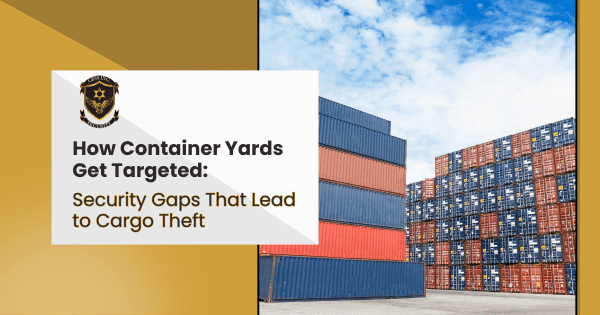
Container yards are built for movement, volume, and speed, but those same qualities can create opportunities for cargo theft when security controls do not keep pace with operations. A weak gate procedure, an overlooked fence line, an unverified driver, or a predictable patrol can turn a busy logistics environment into an easier target.
The scale of the problem is significant. The FBI reported that estimated cargo theft losses across the United States and Canada reached nearly $725 million in 2025, while confirmed cargo theft incidents increased 18 percent. For operators reviewing their exposure, working with an experienced security provider can help identify vulnerabilities before they contribute to a loss.
Why Container Yards Are High-Value Targets for Cargo Theft
Container yards concentrate large amounts of merchandise in relatively defined areas, often while containers wait for pickup, transfer, inspection, or onward transportation. That concentration makes container yard security particularly important.
Common risk factors include:
- High volumes of trucks, vendors, employees, and visitors
- Containers remaining on-site for extended periods
- Night, weekend, and holiday activity
- Multiple vehicle and pedestrian access points
- Frequently changing container and trailer positions
- High-value cargo mixed into routine movements
In a busy yard, legitimate movement can also provide cover for unauthorized activity. A truck leaving the property may not appear suspicious simply because trucks leave all day.
How Thieves Identify Vulnerable Container Yards
Cargo thieves may look for visible weaknesses such as damaged fencing, poorly lit boundaries, open secondary gates, inconsistent driver verification, unattended containers, and predictable patrol patterns.
Even small weaknesses matter when they appear repeatedly. A security gap that seems harmless during normal operations can become valuable information to someone observing the property.
Organized Cargo Theft vs. Opportunistic Theft
Not every incident is planned the same way. Opportunistic theft may occur when cargo is temporarily left unsecured or an access point is poorly controlled. Organized cargo theft can involve reconnaissance, fraudulent identities, coordinated vehicle access, manipulated shipping information, or knowledge of specific shipments.
Effective cargo theft prevention should account for both.
Weak Gate and Access Controls Create the First Security Gap
The main gate should be a control point, not simply a traffic checkpoint. One of the biggest weaknesses in container yard access control occurs when guards or employees allow familiarity and routine to replace verification.
Common gate-control failures include:
- Failing to confirm driver identity
- Allowing vehicles through without matching authorization
- Using incomplete visitor logs
- Sharing or poorly controlling access credentials
- Allowing vehicles to follow authorized traffic through a gate
- Failing to escalate mismatched paperwork
The FBI has specifically encouraged transportation and logistics companies to independently verify pickups and maintain documentation involving drivers, vehicles, license plates, carrier information, and shipment communications.
Driver, Vehicle, and Visitor Verification Failures
A driver may look familiar, know the right company name, and present convincing documents. That should not automatically establish authorization.
Guards should know what information must be verified before access is granted. CBSS’s guide to the duties and responsibilities of security officers illustrates why clear expectations matter at security posts where personnel are responsible for controlling access.
Why Documentation Alone Is Not Enough
Paperwork should be one layer of verification, not the entire system. Depending on the operation, verification can include identification checks, dispatch confirmation, vehicle information, electronic access controls, and escalation when something does not match.
A convincing document should never override a failed verification step.
Perimeter Weaknesses Give Thieves Alternative Entry Points
A heavily controlled front entrance cannot compensate for an exposed rear fence.
Container yards should regularly inspect:
- Fence damage and gaps
- Secondary vehicle and pedestrian gates
- Vegetation obscuring visibility
- Materials stacked beside fences
- Drainage channels or uneven ground
- Adjacent lots and access roads
- Areas hidden by trailers or containers
- Damaged locks or barriers
Fence Lines, Secondary Gates, and Blind Spots
The entire boundary should be treated as part of the security system. Thieves do not have to use the same entrance as employees and drivers.
This is where vehicle patrol security can complement fixed security posts by extending observation across larger industrial properties.
How Regular Perimeter Patrols Reduce Exposure
Documented patrols can identify changes that cameras or gate personnel may miss, including newly damaged fencing, abandoned vehicles, failed lights, altered locks, or suspicious activity around neighboring properties.
Patrol findings should be recorded and corrected, not simply observed.
Poor Lighting and Surveillance Leave Cargo Movements Unseen
Installing cameras does not automatically create effective cargo yard surveillance. Cameras must capture usable information in the places where theft or unauthorized movement is most likely to occur.
Priority areas generally include:
- Entrances and exits
- Container rows
- Loading and staging areas
- High-value cargo areas
- Fence lines and secondary gates
- Trailer parking areas
The Security Risks Created by Camera Blind Spots
Container yards constantly change. A camera that had a clear view last month may be partially blocked today by trailers, stacked containers, temporary equipment, or changes in the yard layout.
Camera coverage should therefore be reviewed as operations change.
Lighting Should Support Both Guards and Cameras
Lighting supports two security functions at once. It improves what guards can observe during patrols and what surveillance systems can record.
Dark approaches, shadowed container rows, and poorly illuminated fence lines can make detection and identification more difficult.
For facilities combining warehousing and outdoor storage, CBSS’s guide to warehouse security solutions explains how cameras, physical security, and personnel work better as coordinated layers.
Uncontrolled Container and Trailer Movement Makes Theft Harder to Detect
Cargo security depends on knowing not only who is entering the property, but also what is moving through it.
A basic chain-of-custody process can include:
Arrival → container identification → seal verification → location assignment → movement record → driver authorization → dispatch confirmation → exit verification
Each step creates another opportunity to detect something that does not belong.
Container Numbers, Seals, and Chain-of-Custody Checks
Container identifiers and seals should be checked at appropriate transfer points. U.S. Customs and Border Protection’s CTPAT security criteria emphasize seal controls, documented procedures, and reporting processes for discrepancies.
A broken, incorrect, or unexplained seal should trigger a defined response.
Why Exit Controls Matter as Much as Entry Controls
Unauthorized cargo does not always enter illegally. In some theft schemes, the vehicle or driver may gain apparently legitimate access before the shipment is diverted.
Outbound verification gives security personnel one final opportunity to determine whether the driver, vehicle, container, and release authorization match.
Predictable Guard Routines Can Become a Security Vulnerability
Security personnel create deterrence partly because an observer should not know exactly when or where a guard will appear.
Container yard security programs should emphasize:
- Varied patrol timing
- Active gate observation
- Accurate security logs
- Communication between posts
- Immediate escalation of irregular activity
Why Randomized Patrols Are Harder to Exploit
When practical, varying patrol timing and routes makes unattended periods less predictable. Guards should still cover required checkpoints, but the pattern should not become so repetitive that someone outside the facility can easily map it.
Post Orders Should Define Exactly What Guards Verify
Effective security post orders should define driver checks, gate procedures, patrol responsibilities, suspicious-activity reporting, emergency contacts, and escalation requirements.
For higher-risk facilities or shipments, operators may also consider whether armed security protection is appropriate following a site-specific risk assessment.
Insider Access and Information Can Increase Cargo Theft Exposure
Physical barriers become less effective when someone already knows what cargo is present, when it moves, and how security operates.
Sensitive information may include:
- High-value shipment locations
- Pickup schedules
- Access credentials
- Container information
- Guard routines
- Temporary access codes
- Shipment manifests
Limit Access to High-Risk Cargo Information
Employees should generally receive the access and operational information necessary for their responsibilities, rather than unrestricted visibility into every shipment or secure area.
Access should also be reviewed when roles change or employment ends.
Vendor and Contractor Access Requires Oversight
Temporary access should remain temporary. Vendor and contractor procedures may include identification checks, sign-in requirements, limited credentials, defined work locations, escorts where appropriate, and expiration of access privileges.
After-Hours Operations Create Additional Opportunities for Cargo Theft
Nighttime, weekends, holidays, and shift transitions change the environment around a container yard. Staffing may fall, surrounding businesses may close, management presence can decline, and missing cargo may take longer to discover.
CargoNet has repeatedly identified elevated theft concerns around holiday periods, making after-hours planning an important part of cargo theft prevention.
Shift Changes and Low-Staffing Periods Need Extra Attention
Responsibility should never become unclear because one shift is ending while another begins.
Guards and operational personnel should communicate unresolved access issues, unusual vehicles, open gates, security-system problems, and high-risk cargo requiring continued observation.
High-Value Loads May Require Additional Protection
Security coverage should reflect actual exposure. High-value cargo may justify restricted staging locations, tighter pickup verification, additional patrol attention, or dedicated observation.
This risk-based approach is similar to broader loss prevention security: resources are placed where the potential consequences of a control failure are greatest.
How Container Yards Can Close Security Gaps Before Theft Happens
The strongest container yard security solutions rely on layers rather than one device or one guard post.
A practical cargo-theft prevention checklist includes:
- Audit vehicle and driver verification procedures.
- Inspect the complete property perimeter.
- Review camera coverage for new blind spots.
- Test nighttime lighting.
- Confirm container and seal verification procedures.
- Review outbound cargo-release controls.
- Update security post orders.
- Vary and document patrol activity.
- Limit unnecessary access to shipment information.
- Review incident and emergency escalation procedures.
Use Layered Security Instead of Relying on One Control
Fencing slows access. Lighting improves visibility. Cameras create observation and records. Verification controls movement. Guards provide judgment and response.
Each layer has limitations. Used together, they make a facility considerably more difficult to exploit.
Businesses evaluating protection options can review CB Security Solutions’ broader security services and industries served to understand how coverage can be adapted to different operational environments.
Conduct Regular Container Yard Security Assessments
A security plan should change when the yard changes.
New container layouts, surrounding construction, different cargo types, expanded overnight operations, increased truck traffic, or new access points can create vulnerabilities that did not exist during the previous assessment.
Periodic review helps identify those changes before a thief does.
Strengthen Your Container Yard Before Security Gaps Become Cargo Losses
Repeated trespassing, unexplained access incidents, damaged fencing, inconsistent gate procedures, overnight operations, high-value freight, or prior theft attempts should prompt a closer examination of the facility’s security program.
A container yard does not necessarily need more security everywhere. It needs the right security at the places and times where its exposure is highest.
Start With a Site-Specific Security Risk Assessment
A professional assessment can examine gate procedures, perimeter vulnerabilities, surveillance coverage, lighting, patrol routes, after-hours activity, and cargo-handling controls together rather than evaluating each in isolation.
CB Security Solutions provides security services designed around the risks and operating conditions of the properties being protected. Organizations throughout CBSS’s service areas can use a site-specific review to determine where stronger controls, guard coverage, or patrol services may be appropriate.
Cargo theft often succeeds because several small weaknesses line up at the same time. A poorly verified driver, predictable patrol, dark fence line, camera blind spot, or weak exit check may appear manageable by itself.
The goal of effective container yard security is to prevent those gaps from aligning. Layered access control, perimeter protection, surveillance, documentation, trained security personnel, and regular risk assessments give operators a better chance to detect suspicious activity before cargo leaves the property.