
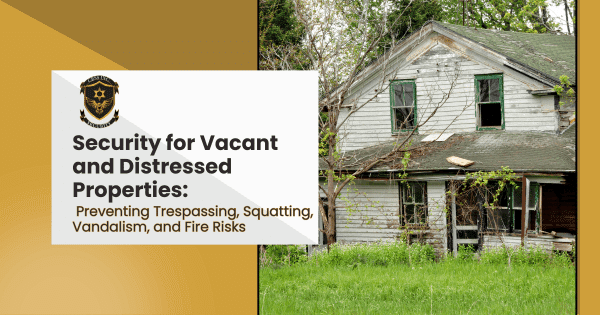
Vacant and distressed properties lose the natural surveillance, routine maintenance, and immediate response that protect occupied buildings. Effective security for vacant and distressed properties therefore requires more than strong locks or occasional drive-bys. It requires coordinated physical security, monitoring, inspections, documentation, maintenance, and emergency response.
The risk is measurable. A historical U.S. Fire Administration report on vacant residential building fires estimated that approximately 23,800 such fires occurred annually between 2013 and 2015, causing deaths, injuries, and hundreds of millions of dollars in property losses each year.
Property owners and managers can reduce these exposures by building a site-specific plan around the property’s condition, location, contents, history, and surrounding activity. The broader security services available through CB Security Solutions can help stakeholders compare patrol, guard, monitoring, and risk-assessment options as conditions change.
Why Vacant Properties Require a Specialized Security Plan
Vacant property security is a coordinated system of physical barriers, monitoring, inspections, maintenance, documentation, and incident response designed to prevent unauthorized access and identify damage before it becomes a larger loss.
Once a property becomes empty, ordinary building security becomes less reliable. There may be no employees to report a broken window, no residents to notice smoke, and no maintenance team to catch a leaking pipe. A minor problem can remain hidden for days or weeks.
Four risks deserve immediate attention:
- Unauthorized entry: Damaged doors, accessible windows, roof hatches, and loading areas create opportunities for trespassing.
- Repeated occupation: Occasional entry can develop into persistent squatting or unauthorized use when no one responds.
- Property damage: Wiring, appliances, HVAC equipment, fixtures, and construction materials may be stolen or destroyed.
- Fire and environmental loss: Trash, improvised electrical connections, water intrusion, and disabled protection systems can turn neglect into catastrophe.
Visible signs of vacancy increase these risks. Uncollected mail, overgrown vegetation, darkness, graffiti, broken glazing, and unsecured gates tell outsiders that intervention may be delayed.
Vacant, Unoccupied, Abandoned, and Distressed Properties
These terms should not be treated as universal legal or insurance definitions.
A property may be temporarily unoccupied while remaining maintained and ready for use. A vacant building may contain little or no personal property. An abandoned property may show evidence that the responsible party no longer maintains or controls it. A distressed property may be occupied or vacant but affected by foreclosure, construction delays, casualty damage, financial pressure, or serious deterioration.
The classification can affect insurance coverage, lender requirements, municipal obligations, and the appropriate security response. Owners should confirm applicable definitions with their insurer, lender, property counsel, and local authorities.
Begin With a Vacant-Property Security Risk Assessment
Equipment should not be purchased until the property’s vulnerabilities are understood. A vacant property risk assessment gives owners, asset managers, receivers, insurers, and security providers a documented starting point.
Use this seven-step vacant building security checklist:
- Confirm occupancy status. Determine who may lawfully access the site and whether contractors, tenants, receivers, or other stakeholders still use any portion.
- Photograph the baseline condition. Capture every elevation, room, entrance, opening, utility area, roof-access point, and existing defect.
- Inventory access points. Record doors, windows, gates, loading bays, crawlspaces, skylights, roof hatches, fire escapes, and adjoining structures.
- Review previous incidents. Examine alarm records, police reports, vandalism, theft, dumping, fires, and repeated damage.
- Check critical systems. Document lighting, cameras, alarms, fire protection, plumbing, electrical service, drainage, and environmental controls.
- Study surrounding activity. Note neighboring occupancy, foot traffic, concealment areas, transit access, encampments, construction, and nighttime conditions.
- Confirm stakeholder requirements. Review insurance policies, loan documents, servicing instructions, municipal rules, and contractual deadlines.
Fannie Mae’s property-inspection guidance illustrates the importance of inspecting suspected vacant properties, protecting them from vandalism and the elements, and notifying the property insurer when applicable. While those servicing requirements do not govern every property, they demonstrate the value of prompt action and formal documentation.
Rank each vulnerability as high, medium, or low based on both likelihood and consequence. A broken rear window may be highly likely to attract entry. A disabled sprinkler valve may be less visible but far more consequential.
Secure the Perimeter and Harden Every Entry Point
Physical security should move from the outside inward:
- Perimeter
- Grounds
- Doors and windows
- Roof and secondary openings
- Utilities and equipment
- Interior zones
Begin by repairing fencing and locking vehicle and pedestrian gates with appropriate commercial hardware. Post ownership, restricted-access, emergency-contact, and surveillance notices where legally appropriate. Remove overgrowth, discarded furniture, pallets, ladders, and other objects that conceal activity or provide climbing assistance.
The goal is not to make the site look deserted and fortified. It is to make it look controlled.
Maintain landscaping. Remove mail and flyers. Repair graffiti quickly. Keep address markings visible. Use motion-activated or strategically scheduled lighting around entrances, parking areas, alleys, loading zones, and concealed approaches. Position fixtures carefully so glare does not blind cameras or create deep shadows.
Doors, windows, frames, hinges, strike plates, roll-up doors, basement openings, and roof hatches should be inspected together. A high-quality lock provides little value when the frame can be separated from the wall. When boarding is necessary, use code-compliant panels or security screens without obstructing required emergency access.
High-value components may require separate protection. Prioritize:
- Electrical and telecommunications rooms
- HVAC units and generators
- Elevators and mechanical equipment
- Plumbing components and exposed copper
- Appliances, tools, and construction materials
- Fuel storage and portable machinery
For additional planning principles, review CBSS guidance on warehouse security, cameras, guards, and theft prevention.
A property with repeated breaches, valuable equipment, or a credible threat may need professional on-site coverage. Depending on the assessment, that may involve unarmed personnel, patrol officers, or armed security protection for genuinely elevated-risk conditions.
Prevent Trespassing and Squatting Before Repeated Occupancy Develops
Unauthorized occupancy becomes harder to resolve when warning signs are ignored. Changed locks, covered windows, delivered mail, bedding, food containers, improvised wiring, vehicle activity, or repeated damage to the same entrance may indicate ongoing use.
Follow a five-step response:
- Detect: Use alarms, cameras, patrols, neighbors, and inspections to identify unusual conditions.
- Verify: Observe from a safe location and determine whether an immediate emergency exists.
- Document: Preserve photographs, footage, alarm records, license-plate information, and inspection logs.
- Report: Contact law enforcement, property counsel, the insurer, or the appropriate local agency.
- Resecure: Inspect and repair the property as soon as lawful access has been restored.
Do not confront suspected occupants alone. Owners should also avoid lockouts, utility shutoffs, physical removal, or other self-help actions without legal guidance. Trespass, squatting, eviction, and abandoned-property laws vary significantly by jurisdiction.
Active oversight should remain visible. Display current management contact information, repair damaged barriers quickly, vary patrol times, maintain the grounds, and coordinate with nearby businesses or residents.
The effectiveness of any guard program depends on clear post orders and escalation procedures. CBSS explains common security-officer duties and responsibilities, including observation, patrol, access control, reporting, and appropriate incident response.
Reduce Vandalism, Theft, and Property-Stripping Losses
The best theft-prevention strategy combines two principles: remove the target and detect the offender.
Remove or Isolate the Target
- Remove portable tools, appliances, fuel, and loose construction materials.
- Lock or cage exposed equipment.
- Record model and serial numbers.
- Mark valuable components where appropriate.
- Block unauthorized vehicle access to loading and utility areas.
- Relocate high-value materials to an occupied or monitored location.
- Consult qualified professionals before disconnecting utilities or building systems.
Detect the Offender
Cameras should cover likely actions, not merely the front entrance. Monitor approaches, alleys, doors, windows, loading areas, utility equipment, parking areas, and interior transition points.
Select systems with remote health checks, tamper alerts, low-light performance, dependable connectivity, and secure footage retention. A camera that loses power without notification can create false confidence.
Video should support a response plan. Recording a break-in is not enough when no one receives the alert, no keyholder is available, and the damaged opening remains unsecured overnight.
Control Fire, Water, and Environmental Hazards
Crime is only one category of vacant building risk. Fires, leaks, storms, structural deterioration, and neglected utilities can produce equally severe losses.
The U.S. Fire Administration’s guidance for reducing arson at vacant buildings emphasizes inspection and evaluation, including the identification of hazards that could affect first responders.
Use this vacant-building fire and hazard checklist:
- Remove trash, mattresses, paper, vegetation, fuel, and abandoned contents.
- Restrict access to electrical panels and utility rooms.
- Correct damaged wiring and unauthorized connections.
- Maintain required alarms, sprinklers, extinguishers, and fire-department access.
- Keep hydrants, fire lanes, and address markings visible.
- Inspect roofs, drains, windows, plumbing, and weatherproofing.
- Document unstable ceilings, stairs, railings, flooring, and structural openings.
Do not assume that shutting off every utility is safest. Fire alarms, sprinklers, sump pumps, cameras, intrusion systems, freeze protection, humidity controls, elevators, and emergency lighting may depend on electrical or water service.
Utility decisions should be coordinated with qualified contractors, insurers, fire-protection professionals, lenders, and local authorities. The safest configuration for a small vacant residence may be inappropriate for a warehouse, multifamily building, construction project, or partially operating commercial property.
Combine Technology, Patrols, and Documented Response
No single security measure protects every threat surface.
- Cameras provide visual verification and evidence.
- Intrusion alarms identify breached doors, windows, and interior zones.
- Environmental sensors detect smoke, temperature changes, moisture, and utility failures.
- Mobile patrols provide visible deterrence and physical condition checks.
- Standing guards provide continuous presence during severe or active threats.
Mobile patrols can be especially useful for portfolios, construction sites, large lots, and multi-building properties that do not require a permanent officer at one location. CBSS provides a detailed explanation of how vehicle patrol security works.
Every alert needs an escalation path:
- Who receives the notification?
- Who verifies the incident?
- When are police or fire services contacted?
- Who may authorize emergency repairs?
- How quickly must the site be reinspected?
- Where are reports, photographs, and footage retained?
Without these answers, technology may document a loss without limiting it.
Put the Property on a Repeatable Inspection and Reporting Schedule
There is no universal inspection frequency for every vacant property. The schedule should reflect site conditions as well as insurer, lender, contract, and municipal requirements.
| Property condition | Example inspection approach |
| Lower exposure, secure systems, no incident history | Regular scheduled inspections consistent with stakeholder requirements |
| Accessible property or unreliable monitoring | More frequent checks and periodic after-hours visits |
| Recent trespassing, theft, or vandalism | Frequent inspections with randomized patrols |
| Active threat, repeated occupancy, or major casualty damage | Continuous or near-continuous professional coverage until stabilized |
Increase inspections after storms, alarm failures, utility interruptions, fires, break-ins, or contractor activity.
Each vacant property inspection report should identify the date, time, inspector, photographs, entry-point condition, utility status, alarm condition, signs of occupancy, new damage, corrective actions, and follow-up deadlines. Reports should be stored in one accessible system so owners, lenders, insurers, receivers, counsel, and security personnel work from the same record.
Create a 30-Day Vacant-Property Protection Plan
First 24 Hours: Stabilize the Property
- Photograph existing conditions.
- Repair breached entry points.
- Remove immediate fire and safety hazards.
- Notify insurers and relevant stakeholders.
- Establish emergency contacts and alert escalation.
First Week: Install Layered Protection
- Complete the risk assessment.
- Improve locks, fencing, lighting, alarms, and surveillance.
- Schedule inspections or mobile patrols.
- Assign documentation, maintenance, and repair responsibilities.
- Confirm lawful response procedures for unauthorized occupancy.
First 30 Days: Test and Refine the Program
Review alarm activity, patrol reports, camera coverage, maintenance conditions, response times, and repeat vulnerabilities. Adjust the plan whenever construction begins, valuable equipment arrives, a new incident occurs, or the surrounding environment changes.
CB Security Solutions offers coverage across multiple industries and California service areas. Property owners, lenders, receivers, developers, insurers, and management firms can request a vacant-property security assessment covering perimeter vulnerabilities, intrusion risks, patrol needs, monitoring options, fire hazards, and a property-specific protection plan.
Vacant-property security is not a one-time act of locking the doors. It is a continuing process of assessment, deterrence, detection, inspection, response, repair, and documentation. The faster a property appears controlled, the less opportunity there is for trespassing, theft, squatting, vandalism, fire, and preventable deterioration.