

Warehouse security is not one thing. It is a working system made up of people, technology, procedures, and follow-through. When those pieces support each other, theft gets harder, internal loss becomes easier to detect, and your operation runs with far fewer surprises.
Cargo theft losses are estimated in the billions each year, and warehouses and distribution centers remain common targets, which is why many operators now pair stronger site controls with trained on-site personnel and tighter response procedures. For facilities with high-value inventory, after-hours traffic, or sensitive deliveries, adding a dedicated armed security protection layer can be the difference between simply recording a problem and stopping it in real time.
What “Warehouse Security” Really Includes: People, Technology, and Process
When most owners think about warehouse security, they picture cameras first. Cameras matter. So do alarms. So do gates, badges, locks, visitor sign-ins, yard lighting, and patrols. But on their own, none of those tools creates real control. The real goal is not to buy equipment. The goal is to create a site where unauthorized access is difficult, suspicious behavior is noticed early, and incidents are handled before loss spreads.
A strong warehouse security program usually includes:
- A site-specific risk assessment
- Controlled access at entrances, exits, docks, and yard gates
- Visitor and contractor management
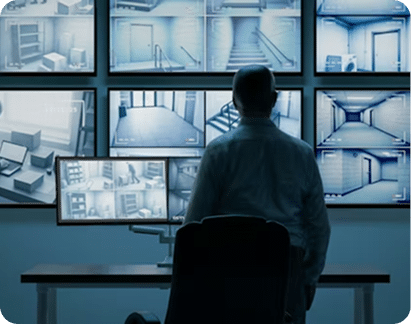
- Camera coverage that matches how goods and people actually move
- Intrusion alarms and after-hours protection
- Guard coverage where human judgment is needed
- Reporting procedures, logs, and escalation protocols
That last point matters more than many teams realize. A warehouse can have expensive hardware and still be poorly protected if nobody owns the process. Someone has to review access activity. Someone has to respond to alarms. Someone has to verify who is supposed to be in receiving at 10:45 p.m. Someone has to notice when a side door is being used in a way that does not match normal operations.
This is where layered protection becomes practical instead of theoretical. A badge reader tells you who entered. A camera helps confirm what happened. A guard or supervisor can intervene on the spot. A written report creates a record your team can actually use later. That is security doing its job.
If your operation has never been formally evaluated, it is smart to start with a walkthrough and a clear list of exposure points. Dock doors, employee entrances, trailer parking, blind spots between racks, receiving desks, cage storage, and yard access points all deserve attention. If you want help turning that into an actual plan instead of a loose wish list, contact CB Security Solutions.
Why Warehouses Get Targeted and Where Loss Usually Starts
Warehouses attract theft for a simple reason: concentration. Inventory sits in volume, shipments move fast, and busy operations often create moments where no one is fully watching. Loss does not always begin with a dramatic break-in. Often it begins with routine becoming casual.
Common warehouse loss patterns include:
- Unattended docks during shift changes
- Loose visitor control for vendors, drivers, and contractors
- Shared credentials or weak key control
- Incomplete camera coverage at entry and exit points
- Poorly lit yard areas and trailer lines
- Inventory left in predictable staging zones
- Gaps between alarm events and actual response
- Small, repeated internal theft that blends into daily activity
That is why the best warehouse security solutions focus on habits as much as hardware. A thief looks for openings. Sometimes that means a dark fence line. Sometimes it means a door propped open for convenience. Sometimes it means a rushed receiving process where nobody checks whether the person at the dock should actually be there.
There is also a second risk that many facilities underestimate: deception. Modern theft is not always physical force. It can involve fraudulent pickups, fake credentials, manipulated paperwork, or cyber-enabled coordination that helps someone appear legitimate long enough to get close to the load. That is one reason access control and verification matter so much at warehouses. Your front gate and receiving desk are not administrative details. They are security points.
A useful way to think about it is this: if your warehouse is easy to understand from the outside, it is easier to exploit. If an outsider can quickly figure out where staff enter, where trailers sit overnight, which dock gets late deliveries, and which area has no active oversight, your site is speaking too loudly.
That is why physical layout and procedure should always be reviewed together. The site may not need more equipment first. It may need better placement, clearer authority, or a cleaner chain of accountability.
Build a Layered Warehouse Security System That Actually Works
The best warehouse security system is rarely the one with the most gadgets. It is the one where each layer covers the weakness of the next. That starts with the basics.
Start with access control and visitor management
Every warehouse should know who is entering, why they are there, where they are allowed to go, and when they leave. Employees, contractors, drivers, temp labor, janitorial crews, and vendors should not move through the same level of access by default.
A strong access control approach often includes:
- Defined entry and exit points
- Badge, card, code, or credentialed access by role
- Visitor sign-in with identification checks
- Escort requirements for non-employees in sensitive areas
- Key and credential tracking
- Access logs that are reviewed, not just stored
The point is to remove ambiguity. Good security systems reduce the number of moments where someone can say, “I assumed he was supposed to be here.”
Use cameras to cover movement, not just walls
Warehouse security cameras work best when they follow the flow of risk. That means placing them where inventory, vehicles, and people converge, not just where the installer found an easy mount point.
Priority camera zones usually include:
- Main entrances and exits
- Dock doors and loading areas
- Receiving and shipping counters
- Interior cross-aisles with obstructed visibility
- High-value inventory zones
- Cage storage or restricted rooms
- Perimeter gates and yard approaches
- Trailer lines and exterior staging areas
A useful rule is simple: if goods change hands there, if credentials are checked there, or if someone could disappear from view there, that area deserves review.
For many operators, the right choice is not cameras alone but cameras paired with live awareness. Recorded video is excellent for investigation, claim support, and pattern analysis. Live monitoring is what helps shorten the gap between suspicious activity and actual intervention. The right mix depends on the size of the property, overnight exposure, and the value of what moves through the building.
For additional reading, warehouse operators can review OSHA’s warehousing hazards and solutions and the FBI’s cargo theft overview.
Add alarm coverage for after-hours risk
After-hours loss often happens when a site looks closed but is not truly secured. A warehouse alarm system should do more than make noise. It should support a response plan.
That means asking practical questions:
- Which doors, windows, and vulnerable openings are alarmed?
- Are motion sensors placed where intrusion is likely, not just where installation is easy?
- Who receives alerts after hours?
- How fast can someone verify and respond?
- What happens after the first alert, the second alert, and a confirmed breach?
If the answer is “the system notifies someone eventually,” the plan is not finished.
Warehouse Security Guards: The Human Layer That Stops Loss in Real Time
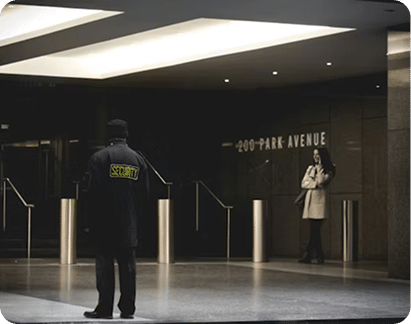
Technology is essential, but warehouses still need human judgment. Cameras can record. Alarms can notify. Access systems can restrict. But when a truck shows up at the wrong time, a side gate is found unsecured, or a visitor’s explanation does not add up, a trained guard becomes the layer that keeps a small problem from turning into a costly one.
Warehouse security guards are especially useful when the site has:
- Large yards or multiple buildings
- Overnight operations
- High-value or fast-moving inventory
- Frequent inbound and outbound traffic
- Limited management presence after hours
- Sensitive customer or supply-chain requirements
In practice, guard coverage should be designed around the property, not copied from another site. One warehouse may need a fixed gatehouse and receiving post. Another may benefit more from mobile patrols, perimeter checks, and dock verification during late shifts.
A thoughtful guard design may include:
- Gatehouse screening and entry verification
- Visitor and contractor management
- Dock observation during loading and unloading
- Interior patrols through key storage and staging areas
- Exterior patrols around fencing, trailer lines, and yard gates
- Alarm response and incident documentation
- Coordination with site leadership and emergency responders
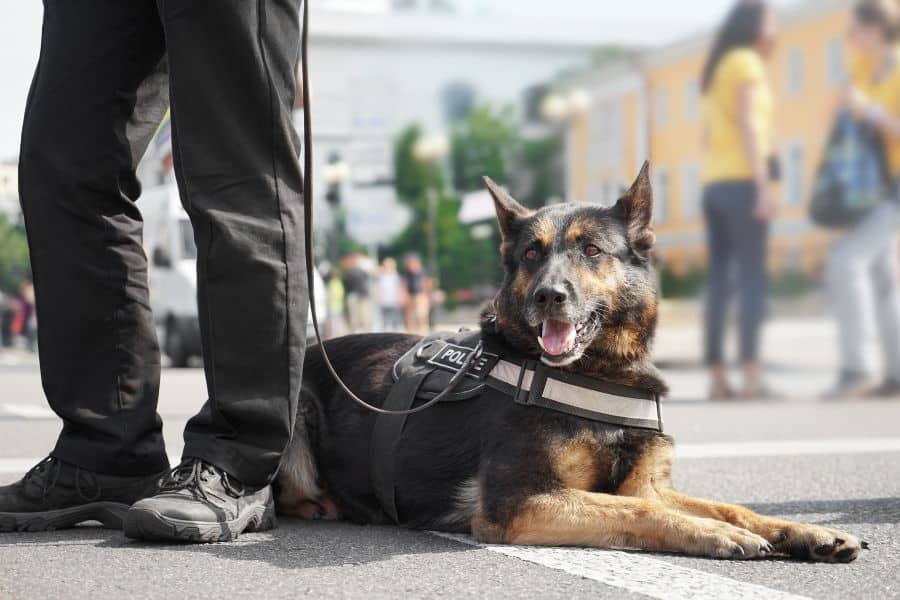
For larger industrial properties, vehicle patrol can be especially useful. Big footprints create distance, and distance creates delay. A mobile patrol unit can cover perimeter lines, remote corners, trailer storage, employee parking, and secondary structures far more efficiently than a static post alone.
This is also where professional reporting matters. A good provider should not just “have guards on site.” You should expect clean activity logs, exception reporting, escalation procedures, and a clear record of what was observed, challenged, and resolved. Security is easier to manage when it leaves a trail.
If your warehouse needs a higher-response posture because of valuable goods, sensitive clients, or elevated after-hours exposure, armed security protection may be part of the right fit. And if you want help mapping that to your facility, contact CB Security Solutions.
How to Choose the Right Warehouse Security Provider
Not every provider is built for industrial environments. Warehouses move quickly, operate across shifts, and require security teams that understand logistics, loading patterns, contractor traffic, and the difference between normal activity and subtle risk.
When comparing providers, look for:
- Experience with warehouse or industrial properties
- Willingness to perform a real site assessment
- A layered plan instead of a one-size-fits-all quote
- Comfort with access control, alarms, cameras, and guard integration
- Clear reporting expectations
- Defined response procedures
- Flexibility for after-hours, holiday, and peak-shipping periods
Also ask a very simple question: what exactly happens when something goes wrong? The answer should be immediate, practical, and specific.
A provider that understands warehouses should be able to explain how they would handle unauthorized entry, suspicious vehicles, dock irregularities, alarm activations, employee access issues, and incident documentation without resorting to vague language. Security is operational. It should sound operational.
For broader physical security planning concepts, NIST’s physical and environmental security guidance is also a useful reference point.
Short takeaway
The best warehouse security does not rely on a single camera, a single guard, or a single alarm. It combines systems, procedures, and people into one plan that makes theft harder, detection faster, and response more reliable. When those layers are built around the way your warehouse actually works, security stops being a patch and starts becoming part of the operation.