
Some properties do not need a guard standing in one place all night. They need motion, visibility, verification, and someone who can show up, inspect, document, and move to the next risk point before a small problem turns into a real one. That is where vehicle patrol security fits.
For many businesses, mobile patrols create a practical middle ground between doing nothing and paying for full-time on-site coverage. According to federal labor data, there were 57,610 nonfatal workplace violence cases in private industry during 2021 and 2022 serious enough to require days away from work, job restriction, or transfer, which is a strong reminder that security planning is about protecting people as much as property. When a site needs a stronger response posture, patrol coverage can also be paired with armed security protection as part of a more layered plan.
What Vehicle Patrol Security Is, and How It Differs From an On-Site Guard
In plain English, vehicle patrol security means trained security officers check a property by car at scheduled or semi-random intervals, rather than staying posted in one location the entire shift. The patrol vehicle moves between checkpoints, entrances, gates, parking areas, loading zones, and vulnerable corners of the site. The goal is simple: make the property feel watched, make irregular activity easier to spot, and make response faster when something looks wrong.
This model makes sense when a client needs broad coverage over a large footprint, especially after hours. It is often a strong fit for:
- warehouses and industrial yards
- office parks and professional buildings
- restaurants with late closings
- parking lots and mixed-use properties
- HOAs, retail centers, and multi-location accounts
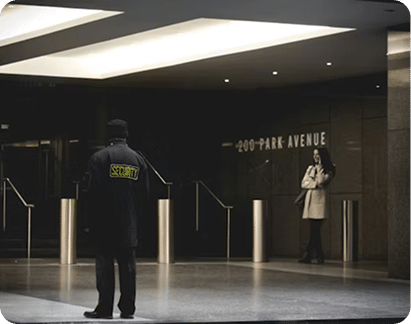
A stationary guard, by contrast, is better when a site needs a constant physical presence. Think high-traffic lobbies, reception desks, active construction gates, busy retail environments, or locations where visitors must be screened continuously.
The real question is not which option sounds stronger. The real question is what risk you are trying to solve.
Vehicle patrol is often the better choice when:
- the property is closed for long stretches
- multiple exterior points need checking
- the main concern is deterrence, lockup, alarm response, or perimeter integrity
- budget matters, but security still has to be visible and accountable
An on-site guard is usually the better choice when:
- there is constant public traffic
- one entrance must be controlled at all times
- incidents need immediate, continuous response
- the property has sensitive assets or a high volume of interaction
The best patrol programs are not random in the sloppy sense. They are structured, but unpredictable enough to avoid becoming easy to read. Routes, frequencies, and check times should be built around the site’s real rhythm: closing time, shift changes, delivery windows, vulnerable dark spots, prior incidents, and alarm history. If your property has a known pain point at 10:30 p.m. and again at 4:45 a.m., those are not guesses. Those are patrol design cues.
What Mobile Patrol Officers Actually Do During a Patrol
A good patrol is not a drive-by. It is a sequence of specific checks, backed by training and reporting. The officer is there to observe, verify, document, and escalate when needed.
A standard vehicle patrol often includes:
- perimeter checks
- parking lot sweeps
- door and gate inspections
- lock-up and unlock service
- lighting checks
- signs of forced entry, tampering, or trespass
- suspicious vehicle or loitering documentation
- alarm response follow-up
- foot checks in blind spots or interior-adjacent areas
That last point matters. A patrol vehicle gives range, but the officer still has to step out when the site calls for it. Some issues cannot be seen well from behind a windshield. Stairwells, dumpster enclosures, side alleys, loading dock corners, roll-up doors, and recessed entryways often need a foot inspection to be checked properly.
For warehouses and commercial sites, patrol tasks are usually more operational. Officers may inspect loading docks, confirm roll-up doors are secured, check trailer and container areas, verify gates are latched, and watch for signs of unauthorized access near yard entries. On a large property, the difference between “looked okay from the road” and “physically checked the vulnerable point” is enormous.
For restaurants and hospitality properties, the pattern is different. The biggest value often shows up around closing. Officers may monitor parking lots for loitering, support employee walk-outs, keep an eye on guest flow after hours, and make sure side doors, patio access points, and cash-handling exit routes are not exposed. That aligns with the broader thinking in OSHA’s workplace violence prevention guidance, which emphasizes lighting, visibility, secure access, and protections for workers during late or isolated hours.
For office and professional buildings, including law firms, patrol work is usually quieter but no less important. Officers may verify access control points, inspect secure areas, check lobby conditions, confirm doors are not propped open, and look for after-hours access patterns that do not belong. In confidentiality-sensitive environments, the patrol team should understand discretion. Presence matters, but so does judgment.
When alarms trigger after hours, patrol response becomes even more valuable. Instead of sending staff into uncertainty, a security officer can respond first, assess visible conditions, coordinate next steps, and document what happened. That helps reduce confusion, speeds up decision-making, and gives the client a cleaner chain of information.
The Best Patrol Programs Combine People, Systems, and Clear Reporting
Vehicle patrol works best when it is part of a layered security plan, not a standalone guess. A strong program ties officers, cameras, alarms, lighting, and access control into one operating picture.
That is why many clients benefit from combining patrols with:
- CCTV review points
- access control verification
- alarm callout protocols
- incident escalation steps
- site-specific post orders
- daily or on-demand reporting
This is also why marked versus unmarked vehicles matters. A marked vehicle creates obvious deterrence. It tells people the site is not unattended. An unmarked vehicle can be useful when discretion matters more, or when the objective is to assess activity without announcing the officer’s arrival from a block away. One is not automatically better. The property and the assignment decide.
The same is true for armed versus unarmed patrol. Most sites do not need an armed response by default. They need the right response for the risk profile. Higher-risk environments, valuable assets, isolated locations, elevated threat histories, or sensitive executive-facing operations may justify a stronger posture. In California, armed security involves specific licensing and firearms-permit requirements, so clients should not treat it as a casual upgrade. When a property needs that level of coverage, it should be planned carefully and staffed correctly. For sites with a heightened threat picture, CB Security Solutions can help clients evaluate whether armed security protection belongs in the overall security mix.
Just as important as the patrol itself is the proof that it happened. Clients should receive more than vague reassurance. They should receive documentation.
Useful patrol reporting often includes:
- time-stamped patrol activity
- checkpoint verification
- photos when appropriate
- daily activity logs
- incident reports for anything abnormal
- clear notes on doors, gates, lighting, vehicles, or suspicious behavior
- fast communication when a client decision is needed
This reporting mindset reflects the logic behind broader federal security guidance, including layered physical security recommendations and the long-standing emphasis on monitoring access and reviewing what happened, not just reacting after the fact. A patrol that cannot be verified is not a strong security program. It is a story.
When Vehicle Patrol Makes Sense, When It Does Not, and What to Ask Before Hiring
Vehicle patrol security makes the most sense when you need coverage across distance, not a constant presence at one fixed point. It is often a smart option for multi-building sites, after-hours properties, parking-heavy facilities, industrial yards, and businesses that want visible deterrence without committing to twenty-four-hour standing post coverage.
It is especially useful when the site has:
- multiple exterior access points
- predictable quiet periods
- an after-hours risk profile
- a need for lockup, unlock, or alarm response
- a parking lot or yard that becomes vulnerable at night
- several locations that need recurring checks
But mobile patrol is not enough for every property. If your site has continuous foot traffic, daily confrontation risk, visitor screening needs, or a high probability of immediate incident response, a dedicated on-site guard may be the better answer. In some cases, the right answer is a layered plan: patrols for perimeter movement and coverage, plus an on-site officer for interior control.
Pricing usually depends on a few major variables:
- patrol frequency
- site size and layout
- number of stops or checkpoints
- whether foot checks are required
- alarm response expectations
- marked or unmarked vehicle preference
- armed or unarmed staffing
- reporting depth and supervision
When choosing a patrol provider, clients should ask clear questions:
- How often will the property actually be checked?
- Are patrol times fixed, randomized, or both?
- What happens during an alarm response?
- What does the report look like after each patrol?
- How is patrol completion verified?
- Who supervises the officers?
- Is the company properly licensed and insured?
- Can California credentials be verified through BSIS?
Those questions cut through marketing language quickly. A real provider should be able to explain the patrol model, reporting cadence, response standards, and supervision structure without dancing around the details. If you want help evaluating what level of patrol coverage makes sense for your property, the best next step is simple: contact CB Security Solutions and build a plan around your actual risks, not a generic package.
Takeaway
Vehicle patrol security works best when the assignment is designed with intention. The strongest programs are visible when they should be, unpredictable when they need to be, and always backed by verification, reporting, and sound judgment. If your property needs broader after-hours coverage without a full-time standing post, mobile patrol may be exactly the right fit.