
Choosing security is not really about picking a guard. It is about picking the right kind of presence for the way your site works, the way people move through it, and the level of risk you are actually trying to manage. The wrong fit can feel expensive, awkward, or ineffective. The right fit feels steady, professional, and almost seamless.
The field is broader than many clients realize. According to the U.S. Bureau of Labor Statistics overview of security guards, security guards held about 1.3 million jobs in 2024, which tells you something important right away: this is not one job with one purpose. It is a wide operational category with different roles, different training expectations, and very different use cases. If you already know your site needs higher-risk coverage, start by reviewing armed security protection. If you are still weighing your options, the better move is to contact CB Security Solutions and match the coverage to the environment before you commit.
How to Choose the Right Type of Security Guard
Before you think about uniforms, vehicles, or whether a post should be armed, step back and ask a few practical questions. The best security decision usually comes from operations, not emotion.
Start with these:
- What are you protecting? People, property, inventory, reputation, or all four.
- What is the site like? A single front desk needs something different from a hotel, a restaurant group, a gated community, or a large multi-building property.
- What is the real risk level? Some environments need deterrence and observation. Others need faster intervention capability and tighter access control.
- How visible should security be? Sometimes you want a strong visual signal. Sometimes discretion matters more.
- How often is coverage needed? Full-time post coverage, overnight checks, special event staffing, executive movement days, or rotating patrols all call for different models.
This is where many buyers make their first mistake. They ask for “a security guard” as if every assignment is interchangeable. It is not. A front-desk lobby officer, an armed officer at a higher-risk site, a mobile patrol officer covering multiple properties, and an executive protection professional are solving different problems.
A good provider should help you sort the assignment into three buckets: deterrence, control, and response. Deterrence is about visible presence. Control is about access, procedures, visitor movement, and rule enforcement. Response is about what happens when something actually goes wrong. Once you know which bucket matters most, the right guard type gets much easier to choose.
Unarmed Security Guards: High-Visibility Deterrence and Customer-Facing Protection
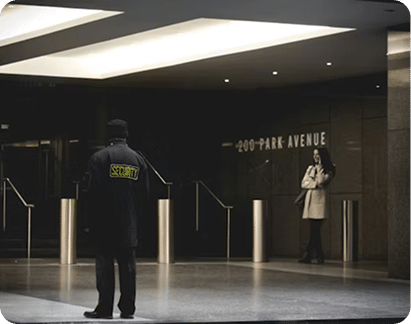
Unarmed security guards are often the right answer when what you need most is calm visibility, controlled access, and a professional presence that does not change the tone of the environment. They are especially effective in places where people are arriving, checking in, asking questions, or moving through shared space.
This type of coverage is often a strong fit for:
- office buildings and corporate lobbies
- residential communities and HOA entrances
- front desk and concierge-style posts
- retail environments
- restaurants and hospitality properties
- schools, churches, and community facilities
A good unarmed officer is not “lesser” security. In many environments, unarmed coverage is the smarter option because it supports safety without making the site feel tense or overbuilt. The work often includes visitor screening, log management, patrols, incident observation, de-escalation, door monitoring, and documenting what happened in a way management can actually use.
This is also where gatehouse and access control specialists matter. If your problem is deliveries, guest verification, vendor entry, or controlling who gets into a property and when, the guard’s judgment and consistency may matter more than anything else. A guardhouse post can be the quiet hinge point that keeps a community or facility running smoothly.
For many clients, unarmed coverage works best when the goals are simple and clear: keep order, maintain a visible deterrent, greet people professionally, and document issues before they become patterns. In public-facing spaces, that balance matters. You want security that feels confident, not disruptive.
If your site needs a polished but visible presence, this is often the best place to start. And if your operation changes over time, an unarmed post can also be paired later with patrol, executive coverage, or a more specialized response plan through CB Security Solutions.
Armed Security Guards and Mobile Patrols: When Risk, Scale, or Asset Exposure Changes the Equation
Armed security guards make sense when the stakes are higher. That usually means one or more of the following is true: the site has a known threat profile, the assets are especially valuable, the hours are vulnerable, the environment is remote, or management needs a stronger response posture than unarmed coverage can reasonably provide.
Armed coverage is commonly considered for:
- high-risk commercial properties
- after-hours sites with repeated incidents
- sensitive facilities and critical assets
- secure transportation needs
- cash, valuables, or high-value equipment exposure
- some construction and industrial environments
The key point is that armed is not automatically “better.” It is more specialized. It should be used because the risk profile justifies it, not because it sounds stronger in a quote request. The right question is whether the post requires a higher level of force readiness, not whether an armed officer simply looks more impressive.
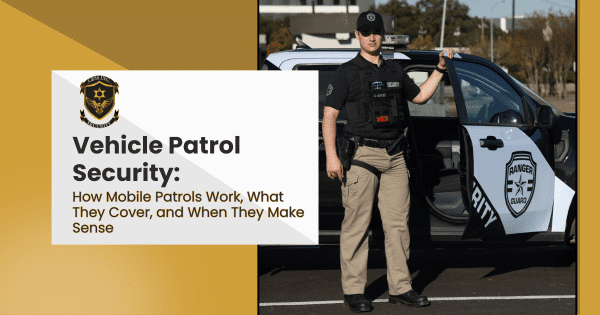
Mobile patrols sit in a different but related category. They are ideal when a property is too large for a single stationary officer or when multiple locations need consistent check-ins without full-time dedicated staffing at each site. Patrol coverage can work especially well for apartment communities, retail centers, office campuses, industrial yards, and construction sites after hours.
A strong patrol model can include:
- perimeter checks
- lock and unlock services
- parking lot sweeps
- incident response
- alarm follow-up
- activity documentation across multiple stops
Construction security often falls into this conversation too. Job sites are vulnerable in a very particular way. Theft is opportunistic, and it often happens when the site is dark, quiet, and easy to predict. Sometimes the answer is overnight patrol. Sometimes it is a dedicated officer. Sometimes it is a mix of both. If the concern is elevated-risk exposure rather than basic visibility, it may be worth comparing unarmed patrol against armed security protection.
Event Security, Hospitality, Retail, and the Plainclothes vs. Uniformed Decision
Some environments need security that can manage people just as much as property. Events, restaurants, nightlife, retail, and hospitality settings all live in that category. In those spaces, safety and guest experience are tied together. A guard who can control a line, watch a room, and speak to people with calm authority is often more valuable than a guard who only knows how to stand post.
Event security is usually about coordinated movement. People arrive in waves. Entrances get crowded. Credentials matter. Emotions rise faster. A minor issue can turn into a visible problem in seconds if nobody owns the threshold. Good event coverage can help with access points, guest screening, perimeter awareness, line control, backstage or restricted-area monitoring, and incident escalation when needed.
Restaurant and hospitality security adds another layer. The space is meant to feel welcoming, but it still needs boundaries. The right officer in this setting often succeeds through posture, awareness, communication, and fast de-escalation. That is why this type of coverage is often more operationally nuanced than outsiders expect. It is not only about removing someone. It is about preventing the room from tipping in the first place.
Retail and loss prevention security bring yet another variation. Here, visibility matters, but so does pattern recognition. A store may need a uniformed presence to discourage shoplifting, improve staff confidence, and create a sense of order. In other cases, a lower-profile approach may make more sense.
That brings us to a practical distinction many clients overlook: plainclothes vs. uniformed guards.
- Uniformed security sends a clear message. It is visible, direct, and useful when deterrence itself is part of the goal.
- Plainclothes security is quieter. It is often better when you want observation, discretion, or a lower profile around guests, executives, or sensitive environments.
Neither is universally superior. They signal different things. One says, “Security is visibly present.” The other says, “Security is here, but not announcing itself.” The right choice depends on how you want the environment to feel and what kind of behavior you are trying to shape.
Executive Protection and Residential Security: Discreet Coverage for High-Visibility Lives
Executive protection is a different discipline from standard site security. It is less about guarding a fixed location and more about protecting a person, a family, or a schedule across changing environments. Work, home, travel, events, meetings, school pickups, and public appearances can all become part of the protection picture.
This kind of coverage is often right for:
- executives and founders
- public-facing professionals
- celebrities and high-net-worth families
- high-visibility litigation or business days
- private residences and estates
- families who need discreet day-to-day protective support
The word that matters here is discreet. Strong executive protection should not create chaos around the principal. It should reduce friction, sharpen awareness, and make movement more controlled. That can mean advance planning, route awareness, arrival and departure management, residential observations, and maintaining a professional low profile in environments where attention itself can create risk.
Residential security overlaps with this more often than people think. Some properties need gate and access control. Others need patrol presence, perimeter checks, visitor management, and a team that understands how to protect privacy without making a residence feel like a fortress. In gated communities and higher-end residential settings, professionalism matters as much as deterrence. Residents notice tone. Guests notice tone. So do vendors and staff.
This is also where an experienced provider can help separate what sounds impressive from what is actually useful. Not every principal needs close protection on a daily basis. Sometimes the smarter move is a layered plan: residential coverage at key hours, a travel-day detail when needed, and a consultation-led review of exposure points. If that sounds closer to your situation, the most efficient next step is usually to contact CB Security Solutions for a more tailored recommendation rather than forcing your needs into a generic guard package.
What “Armed” Really Means in California, What to Expect Operationally, and Why Pricing Varies
In California, “armed” is not just a marketing label. It comes with licensing and compliance requirements. The state’s BSIS security guard registration requirements explain the baseline guard registration process, and the BSIS firearms permit guidance explains the added permit rules for firearm-authorized work. That distinction matters to clients because it separates properly structured coverage from loose language in a sales pitch.
Operationally, clients should expect more than a body on-site. Whatever guard type you choose, the real service standard should include clear post expectations, active supervision, and documentation that helps management stay informed. In practical terms, that usually means:
- post orders tailored to the site
- supervisor oversight
- daily activity logs
- incident reports when issues occur
- communication protocols for managers or stakeholders
- a response plan when coverage needs change
This matters because security value is often won or lost after the incident, not during it. If there is no usable report, no consistent logging, and no chain of communication, the client ends up paying for presence without getting accountability.
Pricing varies by guard type for the same reason. Different posts require different staffing profiles, training levels, equipment expectations, hours, and risk assumptions. In general, cost tends to rise when the assignment involves:
- firearms authorization
- specialized experience or discretion
- solo overnight exposure
- executive movement or travel complexity
- multi-location patrol demands
- high guest volume or crowd management
- reporting and compliance expectations beyond a basic post
The cheapest option is rarely the most economical if it is the wrong fit. A well-matched security plan can prevent overtime waste, reduce incident churn, and create a cleaner operating rhythm for the client.
Quick Match Guide: Which Type Fits Your Situation
If you want a fast answer, start here:
- Corporate office / lobby / visitor-heavy site: Unarmed security or access control officer
- Restaurant / hospitality / nightlife: Unarmed or hybrid guest-facing security with strong de-escalation skills
- Construction site / large property / multi-site portfolio: Mobile patrol or dedicated after-hours coverage
- Higher-risk site or critical asset exposure: Armed security
- Executive, family, or high-visibility schedule: Executive protection
- Gated community or residential property: Gatehouse, patrol, or residential security coverage
- Retail store or shopping center: Visible security with deterrence and incident documentation focus
- Temporary life-safety gap, such as impaired fire systems: Fire watch coverage
The “Best” Guard Type Is the One Matched to Risk, Site Layout, and Guest Experience
There is no universally best type of security guard. There is only the best fit for the job in front of you. The smartest security plans are built around risk, traffic patterns, site culture, and the level of professionalism the environment requires.
If your site needs a stronger posture, a more visible deterrent, or more specialized coverage, explore armed security protection. If you want help sorting through the options before you choose, contact CB Security Solutions and build the plan around the way your property actually operates.
Takeaway: Good security is not just about having coverage. It is about having the right coverage, in the right tone, with the right reporting and response behind it.