
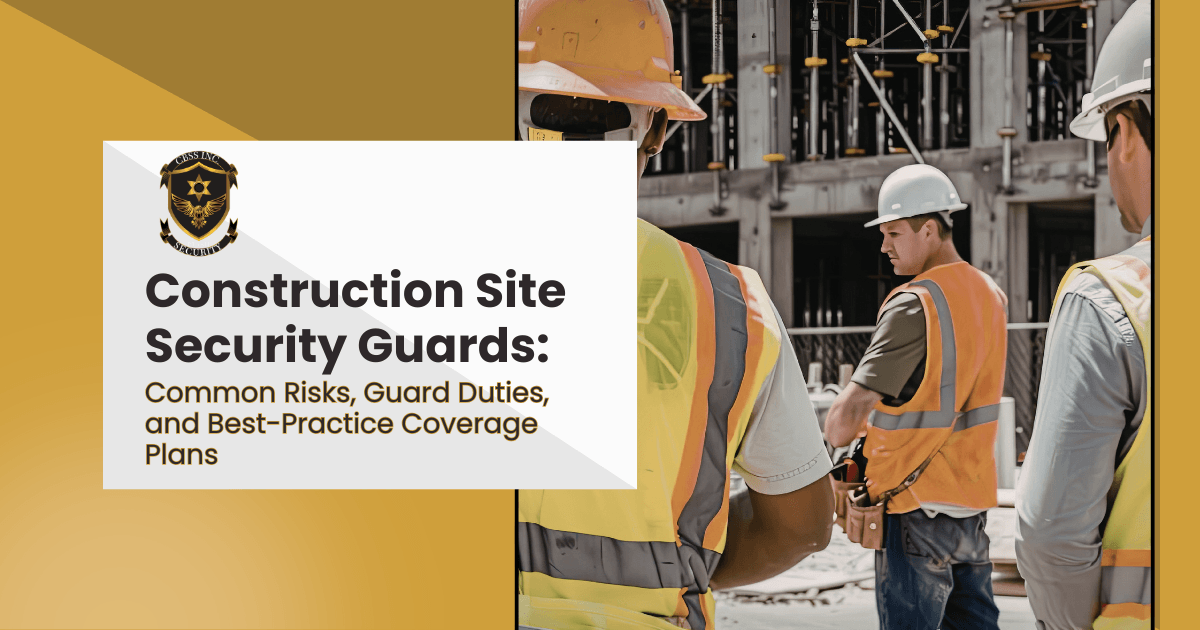
A construction site is never just a construction site. It is inventory, equipment, fuel, access points, vendor traffic, temporary systems, and a shifting perimeter, all sitting in one place and changing by the week. That is exactly why security cannot be treated as an afterthought, especially on projects where delays, theft, or after-hours incidents can ripple straight into schedule and budget pressure.
The better approach is to build protection into the way the job actually runs. For projects that need a stronger visible deterrent or faster on-site intervention, armed security protection can be part of a practical jobsite plan, not just a reaction after something goes wrong. And in a field where construction and extraction occupations still recorded 1,032 fatal work injuries in 2024, it is worth remembering that a jobsite already has enough risk built into it before theft, trespass, vandalism, and fire are added to the picture.
Why Construction Sites Get Targeted, and How Risk Changes by Phase
Construction sites attract the wrong kind of attention for simple reasons. They often sit partially open, partially lit, and partially occupied. They contain high-value tools, mobile equipment, wire, fuel, and materials that can be carried off or resold. They also tend to run on predictable patterns. People know when crews leave, when deliveries stop, and when a site will sit quiet through the night or over a long weekend.
That vulnerability changes as the project changes.
During demo and early site work, the main problems are usually trespass, perimeter breaches, equipment misuse, and theft of tools or fuel. This is the phase where a site can look chaotic enough that suspicious activity blends in. A stranger near the fence does not always look out of place when dumpsters, demo crews, subcontractors, and temporary trades are already moving around.
During framing and rough construction, the site gets physically larger and harder to control. Materials stack up. Access points multiply. Temporary openings stay exposed. This is often where perimeter discipline matters most because once people can slip in unnoticed, a site starts feeling unclaimed.
During MEP and systems installation, the risk becomes more concentrated. Wire, conduit, panels, HVAC components, generators, and other higher-value assets begin to appear in greater density. This is the stage where theft hurts twice. You lose the material, and you lose the labor time needed to replace, re-pull, retest, and re-coordinate.
During finish work, the site starts to look cleaner, more expensive, and more inviting. Appliances, fixtures, hardware, specialty materials, and completed spaces draw different kinds of break-ins. At this stage, a site can be targeted not because it looks vulnerable, but because it looks nearly done.
That is why a single, generic coverage model rarely works. Good jobsite security follows the build. It adjusts post orders, patrol routes, lockup priorities, and reporting standards as the site matures.
A smart rule is this: whenever the site gains value, complexity, or visibility, security should step up with it. If that review has not happened in a while, it is a good time to contact CB Security Solutions and map coverage to the current phase rather than the version of the site that existed a month ago.
Core Guard Duties on Construction Posts, and Theft Prevention Tactics That Actually Work
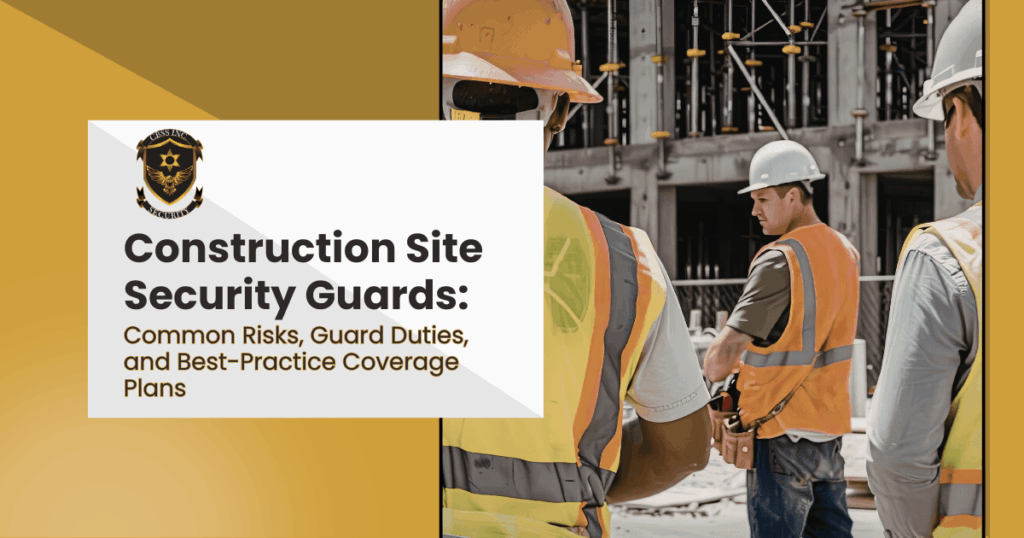
The most effective construction site guards do not just stand at a gate. They create structure where disorder would otherwise take over. Their real value is operational. They help control who enters, what moves in and out, what gets documented, and how quickly a small issue gets noticed before it becomes a claim, a police report, or a schedule problem.
Core guard duties on construction posts usually include:
- access control for workers, vendors, visitors, and after-hours arrivals
- delivery check-in and outbound verification for materials and equipment
- perimeter patrols around fences, gates, staging zones, and blind corners
- lock and unlock procedures for site openings, storage areas, and temporary offices
- incident response for trespass, suspicious vehicles, alarms, and unsafe conditions
- daily documentation that records what was observed, challenged, and escalated
That sounds simple on paper. In practice, it creates a very different site culture. Once visitors know they will be logged, trucks know they will be checked, and the perimeter is visibly watched, the site becomes a harder target.
Theft prevention gets even stronger when guard coverage is paired with physical controls that are easy to maintain:
- keep the perimeter clean, intact, and easy to inspect
- improve lighting at gates, material storage, and equipment parking areas
- stage valuable materials away from the fence line
- use locked cages or hardened storage for small high-value items
- maintain visitor logs and badge procedures for non-routine access
- avoid leaving anything useful on trailers overnight
- document what is on site before weekends and holiday shutdowns
The point is not to create friction for the sake of it. The point is to remove convenience from theft.
A lot of jobsite loss happens because the site gives people a short, quiet window to act. Maybe the fence line is weak. Maybe the lockup routine is inconsistent. Maybe there is no record of who entered after hours. Maybe the camera saw something, but nobody was there to challenge it. Security works when those easy opportunities disappear.
For projects carrying elevated exposure, especially sites with expensive materials, neighbor visibility concerns, or a history of intrusion, a stronger posture may be worth considering through CB Security Solutions’ armed security protection services. The goal is not to overbuild security. It is to match the level of control to the level of risk.
Cameras, Fire Risk, and Reporting: Why the Best Model Is Layered
There is a reason camera-only security disappoints so many project owners. Cameras can record a problem beautifully and still fail to stop it. On a construction site, footage is helpful. Response is what changes the outcome.
That is why the more practical model is a hybrid one: cameras for coverage, guards for judgment, and reporting for accountability.
Cameras do certain jobs well. They extend visibility across a wide footprint. They help monitor gates, trailers, storage areas, and parked equipment. They capture vehicle movement and create a reviewable record. They are especially useful when the site layout changes faster than permanent infrastructure can keep up.
But cameras also have limits. They do not verify deliveries. They do not question unauthorized visitors. They do not notice that a lock was cut thirty minutes before a break-in. They do not walk a fence line, check a dark corner, or smell something overheating near temporary electrical gear.
That is where officers matter. A trained guard can connect details that a device cannot. They can determine whether a vehicle belongs there, whether a person is acting like a subcontractor or casing the property, whether a temporary opening was left unsecured, and whether a situation needs management, law enforcement, or emergency escalation.
Fire risk deserves the same layered thinking. Construction sites are full of temporary conditions: hot work, combustible debris, changing housekeeping standards, temporary power, and occasional impairments in normal protection systems. If welding, cutting, or grinding is happening, fire watch cannot be treated like a checkbox. It has to be deliberate. The OSHA illumination standard is a useful baseline for visibility during active work, and OSHA’s fire watch guidance during hot work is worth building into site planning whenever sparks, slag, or open-flame tasks are in play. For broader construction-fire planning, NFPA’s framework for safeguarding construction and alteration operations is also a strong reference point.
Then comes reporting, which is where many security programs either become credible or fall apart.
Good reporting should answer basic questions clearly:
- Who was on site?
- What happened?
- When was it observed?
- What was challenged or secured?
- Who was notified?
- What changed after the incident?
That record matters later. It matters for management review, insurance conversations, subcontractor disputes, and decisions about whether the current coverage plan is actually doing its job. If you want a site to feel under control, documentation has to be part of the protection, not an afterthought.
Coverage Plans That Fit Different Site Types
Not every project needs the same security model, and trying to force one template onto every site usually wastes money in one place and leaves exposure in another.
Single-family builds often benefit from stronger perimeter discipline, lockup routines, and selective after-hours patrols. Finish-stage protection matters here because the site becomes vulnerable the closer it gets to handoff.
Multi-unit residential projects usually need tighter access management, broader patrol coverage, and better coordination between staging zones, worker entrances, and partially completed spaces. These sites can be busy enough that unauthorized movement is easy to miss unless the post is actively managed.
Commercial tenant improvements often need coverage that respects building operations. Security may need to control contractors, materials, off-hours access, and lockup procedures without disrupting other tenants, staff, or public-facing activity in the same property.
Multi-location projects demand consistency as much as presence. The challenge is not just covering each address. It is keeping post orders, communication, escalation, and reporting aligned across all of them.
That is where provider discipline matters. A good security partner should be able to explain:
- whether the site needs a standing guard, patrol model, or hybrid approach
- what hours actually deserve coverage
- how reporting will be handled
- how supervision works across one site or several
- how quickly the plan can change if the site changes
CBSS’s operating style is built around that kind of clarity. The company emphasizes site-specific planning, professional on-site presence, fast response, daily log review, incident reporting, and recurring communication with management. In plain English, that means coverage is designed around how the job runs, not around a generic post that looks good on paper but does not hold up in the field.
If you are comparing options right now, the smartest next move is usually not to ask for “a guard.” It is to contact CB Security Solutions and ask for the right coverage model for your site type, risk level, and hours of exposure.
Takeaway
Construction site security works best when it is specific, layered, and tied to the way the project actually operates. The strongest plans do not just put someone at the gate. They control access, reduce easy opportunities for theft, improve response, document what matters, and adjust as the build changes.
That is the difference between having security on paper and having a site that actually feels protected.